
EMDR Therapy: Proven Approach to Heal Trauma and Stress
Ever felt like a painful memory is stuck on repeat? It weighs heavily on you. Moving forward seems almost impossible. Yet, you deserve a path to lasting peace.
EMDR therapy offers a transformative solution. Known as eye movement desensitization and reprocessing, it aids your brain in processing tough events. It reworks how your mind stores these experiences, preventing them from causing pain.

EMDR Therapy, EMDR canada, EMDR and truama
Experts now acknowledge its healing power. In studies on EMDR and trauma, researchers found it accelerates healing. You can take back your life. This proven approach offers a fresh start for your mental health.
Key Takeaways
- Direct brain processing of difficult memories.
- Reduced emotional sensitivity to past triggers.
- Faster results compared to traditional talk sessions.
- Strong scientific backing for lasting relief.
- Enhanced mental resilience for future challenges.
- Professional recognition by major health organizations.
What Is EMDR Therapy and How Can It Help You
EMDR therapy has emerged as a powerful tool for addressing traumatic memories and stress. It offers a unique approach to healing. Understanding its fundamentals, history, and differences from traditional talk therapy is key to determining its benefits for you.
Understanding Eye Movement Desensitization and Reprocessing
Eye Movement Desensitization and Reprocessing (EMDR) therapy is a psychotherapy approach recognized for treating trauma and stress-related disorders. EMDR therapy benefits include its ability to help the brain process and integrate traumatic memories, reducing their distressing effects.
The therapy involves bilateral stimulation, which can be achieved through eye movements, sound, or tactile inputs. This stimulation is believed to mimic the brain's natural processing mechanisms during REM sleep, helping to reprocess unprocessed memories.
The Development and Recognition of EMDR
EMDR therapy was developed in the late 1980s by Francine Shapiro, who discovered the positive effects of eye movements on traumatic memories. EMDR therapy has gained widespread recognition and acceptance within the mental health community.
Numerous studies have validated its effectiveness in treating post-traumatic stress disorder (PTSD), anxiety, depression, and other trauma-related disorders. The World Health Organization (WHO) and the American Psychological Association (APA) have recognized EMDR as an effective treatment for PTSD.
| Organization | Recognition | Year |
| World Health Organization (WHO) | Effective treatment for PTSD | 2013 |
| American Psychological Association (APA) | Recommended treatment for PTSD | 2017 |
Why EMDR Differs From Traditional Talk Therapy
Unlike traditional talk therapy, which often focuses on discussing and analyzing traumatic experiences in detail, EMDR therapy takes a different approach. It doesn't require you to relive or extensively verbalize your traumatic experiences.
Instead, EMDR focuses on reprocessing traumatic memories using bilateral stimulation, allowing your brain to heal from the trauma more naturally. This can lead to faster and more effective relief from trauma symptoms.
By understanding how EMDR therapy works and its benefits, you can make an informed decision about whether this therapy is right for you.
How EMDR Therapy Works to Process Traumatic Memories
EMDR therapy uses a unique approach to treat trauma, tapping into the brain's natural healing abilities. It's based on the Adaptive Information Processing model. This model helps us understand how traumatic memories are processed.
The Adaptive Information Processing Model Explained
The Adaptive Information Processing model, created by Francine Shapiro, posits that the brain naturally processes new information. Traumatic events, though, can disrupt this process. This leaves memories stuck in a state of distress.
EMDR therapy aims to reactivate this processing. It helps traumatic memories to be reprocessed and integrated into the person's narrative without distress. This can significantly reduce the negative effects of the traumatic memory.
Bilateral Stimulation and Brain Hemisphere Communication
Bilateral stimulation is central to EMDR therapy. It involves activating both brain hemispheres through eye movements, sound, or touch. This method is thought to mimic the brain's natural processing during REM sleep, improving communication between hemispheres.
By boosting inter-hemispheric communication, bilateral stimulation aids in processing traumatic memories. This reduces their distressing impact.
How Your Brain Naturally Heals Through EMDR
EMDR therapy allows your brain to heal from trauma by reprocessing memories. The bilateral stimulation enhances the brain's ability to integrate traumatic memories into your narrative.
The Role of Eye Movements in Memory Reprocessing
Eye movements are a common bilateral stimulation method in EMDR therapy. By moving your eyes, you stimulate both brain hemispheres. This promotes the reprocessing of traumatic memories.
Studies have shown that eye movements can decrease the vividness and distress of traumatic memories. This makes them less bothersome over time.
Alternative Forms of Bilateral Stimulation
While eye movements are primary, other bilateral stimulation methods exist. These include bilateral sound and tactile stimulation. They are useful for those who find eye movements uncomfortable or ineffective.
| Form of Bilateral Stimulation | Description | Benefits |
| Eye Movements | Side-to-side eye movements guided by the therapist | Reduces vividness and distress of traumatic memories |
| Bilateral Sound | Alternating sound between left and right ears | Effective for those who prefer auditory stimulation |
| Tactile Stimulation | Alternating tactile stimulation, such as tapping on hands | Useful for individuals who prefer physical stimulation |
Proven EMDR Therapy Benefits for Your Mental Health
EMDR therapy offers numerous benefits for mental health, supported by extensive research. When looking into treatments for trauma and stress, understanding EMDR's advantages is key. This knowledge aids in making an informed choice about your mental health care.
Faster Results Compared to Conventional Therapies
One of the standout EMDR therapy benefits is its capacity for quicker results than traditional talk therapies. Research indicates EMDR can lead to significant improvements in a shorter period. This makes it a compelling choice for those seeking quick relief from trauma symptoms.
Long-Lasting Relief From Trauma Symptoms
EMDR therapy is crafted to process traumatic memories effectively, leading to lasting relief. By reprocessing these memories, you can see a notable decrease in PTSD and trauma-related disorder symptoms.
Reduced Need for Detailed Verbal Disclosure
Unlike some traditional therapies, EMDR doesn't require a detailed verbal recount of traumatic events. This is a significant advantage for those who struggle to discuss their trauma.
Recognition by Leading Mental Health Organizations
EMDR therapy is endorsed by top mental health organizations, such as the American Psychological Association and the International Society for the Study of Trauma and Dissociation. This endorsement highlights the therapy's proven effectiveness and its respected status in the mental health field.
| Organization | Recognition/Endorsement |
| American Psychological Association | Recognized as an effective treatment for PTSD |
| International Society for the Study of Trauma and Dissociation | Endorsed for the treatment of trauma and dissociation |
| World Health Organization | Recommended for the treatment of PTSD |
Exploring EMDR therapy benefits is a critical step towards healing from trauma and boosting mental health. The therapy's proven effectiveness, coupled with its recognition by leading mental health bodies, positions it as a valuable option for those seeking trauma symptom relief.
Conditions and Symptoms EMDR Can Address
EMDR therapy has proven to be a versatile treatment, tackling a broad spectrum of mental health issues beyond PTSD. It has shown effectiveness in treating various disorders, bringing hope to those facing complex mental health challenges.
EMDR Therapy for PTSD and Complex Trauma
EMDR therapy stands out for its success in treating PTSD and complex trauma. It aids in processing traumatic memories, reducing their vividness and distress.
Combat and Military-Related PTSD
Veterans and military personnel often grapple with PTSD due to combat and traumatic events. EMDR therapy has been recognized for its effectiveness in addressing combat-related PTSD, aiding in the processing of experiences and symptom reduction.
Childhood Abuse and Neglect
Survivors of childhood abuse and neglect can significantly benefit from EMDR therapy. It helps reprocess traumatic memories, facilitating healing from early trauma's deep-seated effects.
"EMDR therapy has been a game-changer for many survivors of childhood trauma, opening a path to recovery previously unimaginable."
Dr. Francine Shapiro, EMDR Developer
Anxiety Disorders and Panic Attacks
EMDR therapy is also effective in treating anxiety disorders and panic attacks. It addresses the underlying causes of anxiety, such as past traumas or negative beliefs, reducing symptoms' frequency and intensity.
| Condition | EMDR Therapy Benefits |
| PTSD | Reduces symptoms, processes traumatic memories |
| Anxiety Disorders | Decreases anxiety, addresses underlying causes |
| Depression | Helps process grief, reduces depressive symptoms |
Depression and Grief Processing
Individuals struggling with depression and grief can find relief through EMDR therapy. It processes underlying issues contributing to depression, such as unresolved grief or trauma, facilitating healing.

Phobias and Performance Anxiety
EMDR therapy can also benefit those dealing with phobias and performance anxiety. It targets the root causes of these issues, helping individuals overcome their fears and anxieties.
Overall, EMDR therapy offers a holistic approach to treating a wide range of mental health conditions. Its ability to address the underlying causes of psychological distress makes it a valuable treatment option for many individuals.
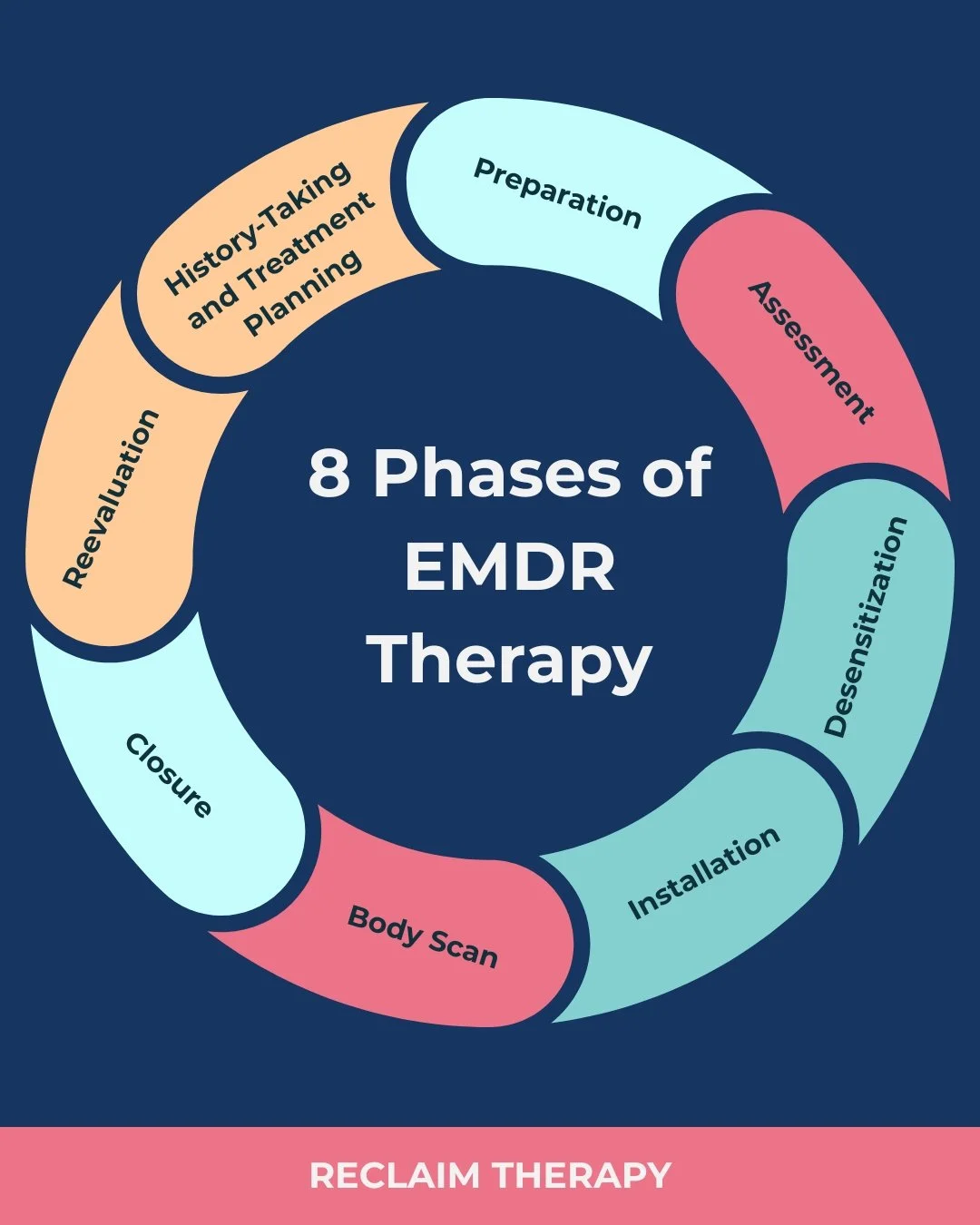
The Complete EMDR Therapy Process: Eight Phases Breakdown
EMDR therapy is a detailed treatment that spans eight phases. Each phase has its own objectives and methods. This structured method allows therapists to customize the treatment to your specific needs and situations.
Phase 1: Your History and Treatment Planning
The first phase of EMDR therapy involves a detailed history and treatment planning. This phase is essential in laying the groundwork for the rest of the therapy.
Identifying Target Memories for Processing
In this phase, you and your therapist will pinpoint the traumatic memories to focus on. You'll discuss your history and identify the memories causing distress.
Setting Your Treatment Goals
You and your therapist will set specific goals for the therapy. These goals will guide the therapy and measure your progress.
Phase 2: Preparation and Building Your Resources
The second phase prepares you for the EMDR process and builds your resources. You'll learn stress management techniques and create a "safe place."
Learning Stress Management Techniques
You'll learn various stress and anxiety management techniques. These will be useful during and after the therapy.
Establishing Your Safe Place
Your therapist will help you find a "safe place." This is a mental image or scenario that makes you feel calm and safe. It's used during therapy to manage distressing emotions.
Phase 3: Assessment of Your Target Memory
In the third phase, your therapist will assess the target memory identified earlier. You'll identify the image associated with the memory, the negative belief, and rate your distress level.
Identifying the Image and Negative Belief
You and your therapist will identify the specific image and negative belief linked to the traumatic memory.
Rating Your Distress Level
You'll rate your distress level when recalling the traumatic memory. This helps track your progress throughout the therapy.
Phase 4: Desensitization Through Bilateral Stimulation
The fourth phase uses bilateral stimulation (like eye movements or tapping) to desensitize you to the traumatic memory. This process reduces the distress associated with the memory.
Phase 5: Installation of Positive Beliefs
In the fifth phase, you aim to install a positive belief to replace the negative one. This helps reprocess the memory in a more positive way.
Phase 6: Body Scan for Residual Tension
The sixth phase involves a body scan to find any residual tension or distress. This ensures the memory is fully processed.
Phase 7: Closure and Stabilization
At each session's end, your therapist will help you stabilize through closure and stabilization techniques. This ensures you leave the session in a stable state.
Phase 8: Reevaluation of Your Progress
The final phase involves reevaluating your progress at the start of each session. This assesses your progress and what remains to be worked on.
Understanding these eight phases helps you navigate the EMDR therapy process effectively. It ensures the best outcomes for your mental health.
Step-by-Step Guide to Preparing for Your First EMDR Session
When looking for EMDR therapy near you, knowing how to prepare for your first session is key. Proper preparation can greatly improve your therapy's effectiveness and make the experience smoother.
Step 1: Research and Set Realistic Expectations
Start by learning about EMDR therapy and what to expect. Knowing the process helps set realistic goals for your therapy's duration and outcomes. It's also wise to understand your therapist's approach and experience with EMDR.
Step 2: Identify Your Treatment Goals
Defining your treatment goals is essential. What do you aim to achieve through EMDR therapy? Are you looking for relief from PTSD, anxiety, or another condition? Clearly stating your goals helps your therapist tailor the treatment to your specific needs.
Step 3: Establish Healthy Coping Mechanisms
It's important to develop healthy coping mechanisms for managing emotional responses during EMDR therapy. This includes practicing grounding techniques and building a support network.
Grounding Techniques You Should Practice
Grounding techniques keep you connected to the present moment, reducing feelings of overwhelm. Examples include deep breathing, mindfulness meditation, and physical activity. Regular use of these techniques can boost your resilience and ability to handle stress.
Building Your Support System
A strong support system is vital for your emotional well-being during and after EMDR therapy. This can include friends, family, or support groups. Having trusted individuals to talk to can significantly aid your healing journey.
Step 4: Prepare Questions for Your Therapist
Preparing a list of questions for your therapist can make you feel more at ease and informed. Consider asking about their experience with EMDR, what to expect during sessions, and how progress will be measured.
By following these steps, you can ensure a thorough preparation for your first EMDR therapy session. This preparation not only enhances your therapy experience but also contributes to a more successful outcome.
What to Expect During Your EMDR Therapy Sessions
As you prepare for EMDR therapy, understanding what happens during sessions can help you feel more comfortable and confident in the process. EMDR therapy is a structured approach that helps you process traumatic memories and reduce their distressing effects.
Your Typical Session Structure and Timeline
EMDR therapy sessions are typically conducted in a safe and supportive environment. Your therapist will guide you through the process, ensuring that you're comfortable throughout.
Session Length and Frequency Recommendations
EMDR sessions usually last between 60 to 90 minutes. The frequency of sessions can vary depending on your specific needs and circumstances. Some people may benefit from weekly sessions, while others may have them less frequently.
Number of Sessions You May Need
The total number of EMDR sessions required can vary significantly from person to person. It depends on factors such as the complexity of your trauma, your personal resilience, and your treatment goals.
| Treatment Complexity | Average Number of Sessions |
| Simple Trauma | 3-6 sessions |
| Complex Trauma | 6-12 sessions or more |
Physical Sensations and Emotional Responses
During EMDR sessions, you may experience a range of physical sensations and emotional responses. These can include feelings of distress, anxiety, or even relief. Your therapist will work with you to manage these responses and ensure your comfort.
"EMDR therapy can elicit strong emotions and physical sensations as it processes traumatic memories. This is a sign that the therapy is working."
Processing Between Sessions
Between EMDR sessions, you may continue to process the experiences and emotions that arise during therapy. It's essential to have strategies in place to manage any unexpected emotions or distressing memories.
Keeping a Journal of Your Experiences
Keeping a journal can be a helpful way to track your progress and note any significant experiences or insights between sessions. This can also provide valuable information for your therapist.
Managing Unexpected Emotions
If you experience unexpected emotions or distress between sessions, it's vital to have coping strategies in place. Your therapist can help you develop these strategies to ensure you're prepared.
How to Find Qualified EMDR Therapy Near Me
Searching for EMDR therapy requires knowing what to look for in a therapist. It might seem overwhelming, but breaking it down helps. You can then find a skilled professional to support your healing journey.
Step 1: Verify EMDR Training and Certification
First, check if the therapist is trained and certified in EMDR. The EMDR International Association (EMDRIA) is key in the U.S. for certifying EMDR therapists.
Understanding EMDRIA Certification Levels
EMDRIA has various certification levels. These include:
- EMDRIA Certified Therapist: Shows advanced training and experience in EMDR therapy.
- EMDRIA Approved Consultant: Indicates expertise for consulting or supervising other EMDR therapists.
Look for these certifications to ensure a therapist's expertise.
Checking Therapist Credentials
Verify a therapist's credentials on the EMDRIA website or by asking them directly. They should be open about their certification and training.
Step 2: Ask These Essential Questions
After finding certified therapists, ask important questions to find the right fit for you.
Experience With Your Specific Condition
Ask about their experience with conditions like yours. For PTSD, for example, ask how many clients they've helped with similar issues.
Treatment Approach and Philosophy
It's important to understand a therapist's approach and philosophy. This ensures their methods align with your expectations and comfort level.
"A good therapist will take the time to explain their approach and ensure you're comfortable with the treatment plan."
Step 3: Understand Insurance and Cost Options
Before starting therapy, know the costs and if your insurance covers EMDR sessions.
| Insurance Coverage | Typical Cost per Session | Sliding Scale Fees |
| Check with your provider | $100-$250 | Some therapists offer income-based rates |
Step 4: Consider Online EMDR Therapy Options
If in-person sessions are not possible, online EMDR therapy is a good alternative. Many therapists offer virtual sessions, which can be just as effective.

By following these steps, you can find a qualified EMDR therapist who meets your needs and helps you achieve your therapeutic goals.
Strategies to Maximize Your EMDR Therapy Success
To get the most out of EMDR therapy, you need commitment, open communication, and self-care. These strategies can boost your treatment's effectiveness and lead to lasting results.
Commit to Completing the Full Treatment Protocol
EMDR therapy spans eight phases, each with a unique role in healing. Finishing the full protocol ensures you tackle all traumatic memories and related issues.
Completing the full treatment protocol lets your therapist customize therapy for you. They can adjust the approach as needed for optimal results.
Maintain Open Communication With Your Therapist
Effective EMDR therapy relies on open communication with your therapist. It's important to share any side effects, concerns, or changes in your condition.
Reporting Side Effects and Concerns
Let your therapist know about any distressing symptoms or side effects. This helps them adjust the therapy to better support you.
Discussing What Works and What Doesn't
Share your thoughts on the therapy, including what helps and what doesn't. This collaborative effort helps tailor the treatment to your needs.
Practice Self-Care Between Sessions
Self-care is key to healing. Taking care of your physical and emotional health helps you cope with EMDR therapy's challenges.
Sleep and Nutrition Considerations
Make sure to get enough sleep and eat a balanced diet. Proper nutrition and rest help your brain process traumatic memories.
Physical Activity and Stress Management
Regular physical activity and stress management, like meditation, are beneficial. They reduce stress and boost your resilience.
Track and Celebrate Your Progress
Monitoring your progress and celebrating small victories boosts motivation. Keep a journal to track changes in symptoms and well-being.
Celebrating your progress reinforces the positive effects of EMDR therapy. It encourages continued commitment to your healing journey.
Conclusion
EMDR therapy is a powerful tool for healing from trauma and stress. It offers a deep understanding of how it works and its benefits. This knowledge is the first step towards achieving a more balanced life. The eight phases of EMDR therapy provide a detailed approach to processing traumatic memories and promoting mental health.
Now, you understand that EMDR therapy is recognized by leading mental health organizations. It can effectively address various conditions, including PTSD, anxiety disorders, and depression. By fully committing to the treatment and maintaining open communication with your therapist, you can increase your chances of success.
If you're struggling with trauma or stress, consider seeking out a qualified EMDR therapist. With the right guidance and support, you can overcome the challenges you're facing and achieve long-lasting relief. Take control of your mental health journey and explore how EMDR therapy can help you heal and move forward.
FAQ
What exactly is Eye Movement Desensitization and Reprocessing (EMDR)?
Eye movement desensitization and reprocessing, or EMDR, is a psychotherapy developed by Dr. Francine Shapiro. It helps process traumatic memories that are stuck in your nervous system. Through bilateral stimulation, like eye movements, it aids your brain in healing, transforming distressing memories into adaptive learning.
How does EMDR therapy for PTSD differ from traditional talk therapy?
Unlike traditional talk therapies, EMDR for PTSD doesn't require detailing your trauma. You focus on physical sensations, emotions, and negative beliefs while undergoing eye movements. This method often leads to quicker results and less emotional fatigue than traditional counseling.
What are the most significant emdr therapy benefits for my mental health?
EMDR therapy benefits include a decrease in traumatic memory vividness and relief from chronic anxiety. It shifts negative self-beliefs to positive ones, like feeling in control. The relief is often permanent, addressing trauma's physiological root.
How can I find a qualified provider for emdr therapy near me?
Look for a qualified EMDR provider through reputable directories like the EMDR International Association (EMDRIA) or EMDR Canada. These ensure therapists have undergone rigorous training, guaranteeing quality care.
Can you explain the eight-phase emdr therapy process?
The EMDR process involves eight phases. It starts with History Taking and Preparation, teaching grounding techniques. Then, it moves to Assessment, Desensitization, Installation of positive beliefs, and a Body Scan. The process concludes with Closure and Reevaluation to ensure the memory no longer triggers distress.
Is emdr and trauma work effective for issues other than major accidents or combat?
Yes, EMDR is effective for "small-t" traumas as well. It's a gold-standard treatment for veterans and survivors of violence. It's also used for generalized anxiety, depression, complicated grief, phobias, and performance anxiety in athletes and professionals.
Is EMDR therapy recognized by major medical organizations?
Yes, EMDR therapy is recognized by organizations like the American Psychiatric Association (APA), the World Health Organization (WHO), and the Department of Veterans Affairs (VA). Its inclusion in these guidelines confirms its scientific validation as a mental health recovery approach.
Can I undergo EMDR therapy sessions online?
Absolutely. Many certified practitioners offer online EMDR therapy using HIPAA-compliant software. With a stable internet connection and a private space, you can experience the treatment's benefits from home.